
 Sign up
E-Commerce Data
Product and marketplace data
Collect prices, product names, SKUs, availability, reviews, seller offers and category rankings from public storefronts.
Collect publicly available web data from websites, directories, marketplaces and open sources with reliable proxy routing.
Public data collection works best when every request looks location-aware, stable and distributed. Use proxies to reach public pages from the right markets, avoid single-IP rate limits and keep scheduled collection jobs running without depending on one server connection.
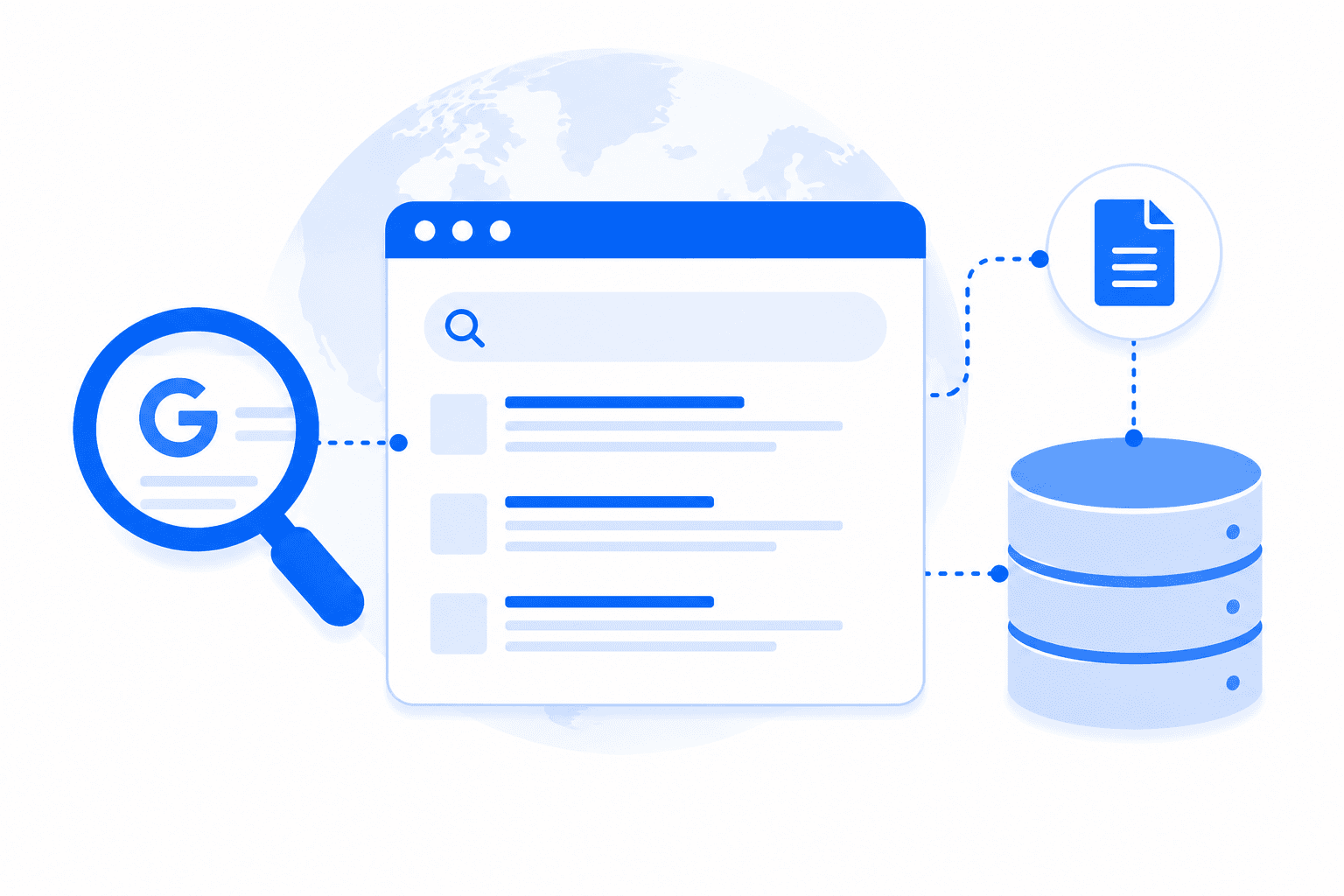
Public data collection is the process of gathering information that is openly available on websites, marketplaces, directories, search pages, public records, forums and content platforms. Teams use it to build market datasets, monitor changes, enrich internal records and feed analytics systems. A proxy layer helps those workflows collect at a consistent pace across locations, pages and source types.
Common examples of publicly accessible data that can be normalized into JSON, CSV, dashboards or internal datasets.
Collect prices, product names, SKUs, availability, reviews, seller offers and category rankings from public storefronts.
Build datasets from public company profiles, locations, service categories, ratings and business directory listings.
Monitor search pages, public articles, metadata, brand mentions and content changes across countries or languages.
Collect public listings from job boards, real estate portals, event directories and other searchable marketplaces.
Public sources often return different pages by country, city, language, device signal or request history. Proxies let collection systems distribute traffic across many IPs, preserve sessions where needed and request public pages from the same regions users see. That makes datasets more complete, less biased by one server location and easier to refresh on schedule.
Collect country-specific prices, listings, search results and localized content from the markets your dataset covers.
Spread collection across multiple IPs instead of sending every request from one overloaded server address.
Run crawlers, browser sessions and data workers at the same time without forcing them through one connection.
Keep the same IP for pagination, filters, cookies or multi-step public browsing flows when source behavior requires it.
Directories, search pages, listings, marketplaces and open databases
Location-aware IP selection, rotation rules and controlled sessions
Normalized JSON, CSV exports, dashboards or warehouse-ready records
Four IP types fit different public collection jobs. Start with the route that matches your source sensitivity, geography and cost-per-success target.
Residential proxies are the most flexible option for public data collection because they provide broad geographic coverage and strong IP reputation. They are a good default for collecting product pages, directories, local listings, search results and public source pages where the response depends on region.
Choose residential proxies when dataset quality matters more than the cheapest request path. They help reduce location bias, avoid relying on one datacenter address and support scheduled collection jobs that revisit the same public sources over time.
Use datacenter proxies for fast, predictable collection from public APIs, open directories and sources with light rate limiting.
Best forUse static ISP proxies when public data workflows need stable identity, long sessions or repeated checks from the same IP.
Best forUse mobile proxies for sources that behave differently on carrier networks, mobile-first pages or app-adjacent public content.
Best forThe best proxies for web scraping are usually rotating residential proxies because they provide access to real residential IP addresses and help reduce blocks, rate limits, and IP-based restrictions. For large-scale data collection, residential proxies are useful when websites apply anti-bot checks, geo restrictions, or aggressive request limits. Datacenter proxies can also work for simpler websites with lower protection.
You need proxies for web scraping because many websites limit how many requests can come from the same IP address. Without proxies, your scraper can quickly get blocked, throttled, or shown incorrect content. A proxy network lets you distribute requests across multiple IPs, scrape from different locations, and collect public web data more reliably.
Yes. Rotating residential proxies are one of the strongest options for web scraping because each request or session can use a different residential IP. This helps scrapers avoid repeated requests from one address, reduces ban risk, and improves access to websites that treat datacenter traffic more strictly. They are especially useful for e-commerce, SERP, travel, real estate, and market research scraping.
Residential proxies use IP addresses associated with real internet service providers, while datacenter proxies come from hosting providers and cloud infrastructure. For web scraping, residential proxies usually perform better on protected websites because they look more like normal user traffic. Datacenter proxies are faster and cheaper, but they are easier for anti-bot systems to detect and block.
Proxies help avoid IP bans by spreading scraping requests across many IP addresses instead of sending all traffic from one source. With rotating proxies, your scraper can change IPs automatically after each request, after a set time, or when a session ends. This reduces repeated patterns and helps maintain stable access during large-scale data collection.
Yes. With geo-targeted proxies, you can scrape websites from specific countries, regions, or cities. This is important when websites show different prices, search results, availability, ads, or localized content based on user location. Geo-targeted web scraping proxies are commonly used for price monitoring, SEO tracking, travel data, marketplace research, and regional content checks.
For most scraping tasks, the best setup is rotating residential proxies with sticky sessions when needed. Fast rotation works well for crawling many pages, while sticky sessions are better when a website requires cookies, login state, cart behavior, or multi-step navigation. The right proxy settings depend on the target website, request volume, session logic, and anti-bot protection level.
Yes. Proxies are widely used for e-commerce scraping, price monitoring, stock tracking, and marketplace data collection. Many online stores show different prices, delivery options, or product availability depending on location. Using residential proxies with country or city targeting helps collect more accurate pricing data and reduces the risk of blocks during repeated product page scraping.
No proxy provider can guarantee that every scraper will work on every website. Blocking depends not only on the proxy IP, but also on request behavior, headers, browser fingerprint, cookies, scraping speed, JavaScript execution, and the target website’s anti-bot system. Proxies are a critical part of a scraping setup, but they should be combined with clean scraper logic and realistic traffic patterns.
For large-scale data collection, start with rotating residential proxies if the target websites are protected, geo-restricted, or sensitive to repeated requests. Use datacenter proxies for simple, high-speed scraping where anti-bot protection is weak. For browser automation or login-based scraping, use sticky sessions so the same IP can stay active during the full workflow.
Start with Residential proxies for broad public web data collection, choose Static ISP for stricter sources, or use Datacenter proxies for fast, high-volume collection from open websites.