
 Sign up
Thread Data
Topics, titles and thread pages
Collect public thread titles, topic categories, URLs, post counts, view counts and discussion metadata.
Collect public forum threads, comments and community signals with proxy routing built for repeatable monitoring.
Forum data collection depends on thread discovery, pagination, timestamps and recurring refreshes. Use proxies to distribute community scraping jobs, preserve sessions for multi-page threads, collect regional public views and avoid routing every forum request through one server IP.
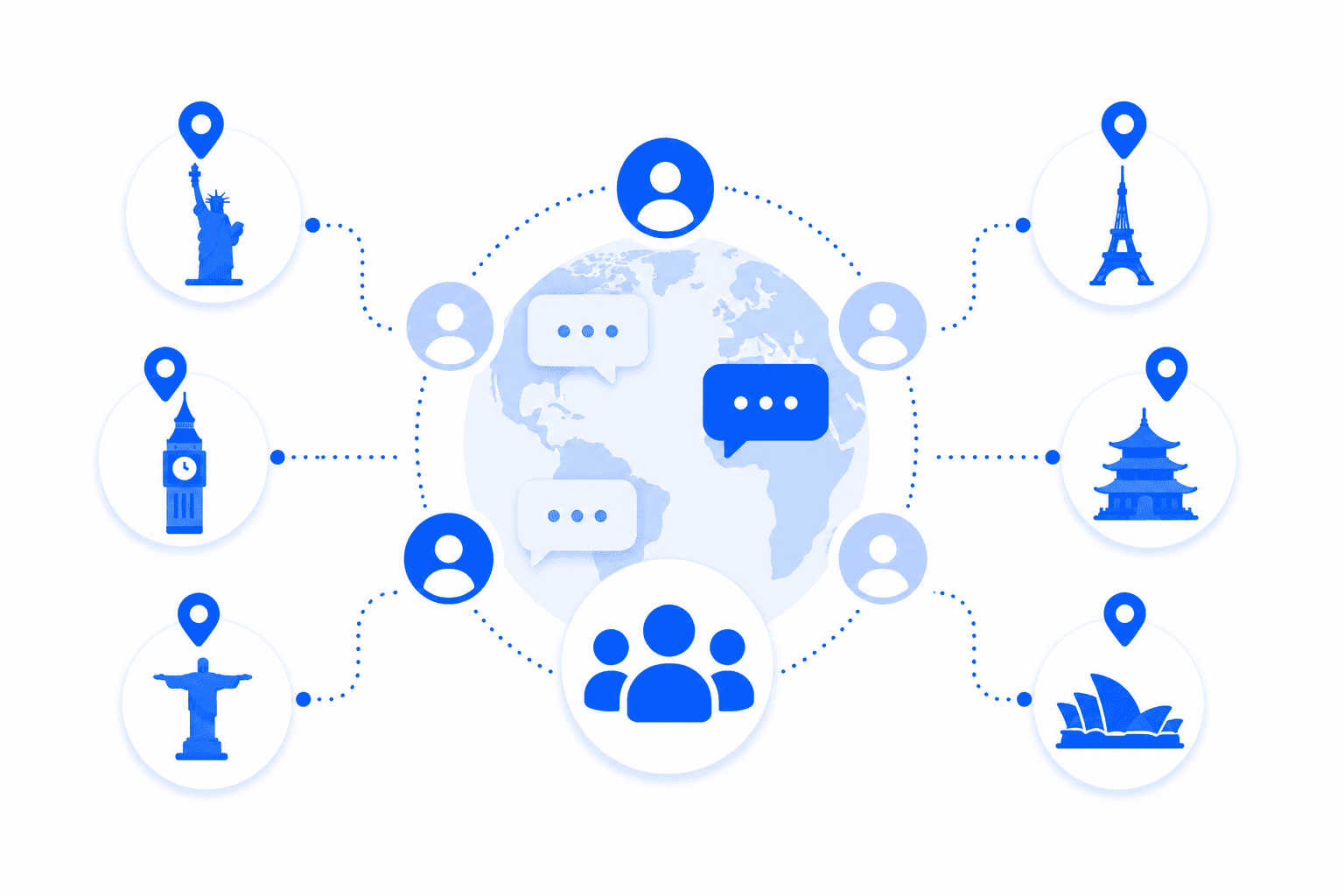
Forum data collection is the process of gathering publicly available discussions from community platforms, message boards, Q&A sites, product communities and niche forums. Teams use it to monitor customer pain points, track emerging topics, build sentiment datasets, research competitors or enrich support intelligence. Proxies help collection jobs reach more public threads and refresh sources consistently.
Common public forum elements that teams normalize into research datasets, monitoring feeds or sentiment workflows.
Collect public thread titles, topic categories, URLs, post counts, view counts and discussion metadata.
Extract public comments, replies, quoted text, timestamps and conversation structure from discussion pages.
Track product mentions, complaints, feature requests, sentiment signals and recurring community themes.
Collect public forum search pages, tag pages, category indexes and paginated archive results.
Forum scraping often revisits the same communities, follows paginated threads and refreshes topic pages over time. If every request comes from one IP, collection can become slow, incomplete or biased toward one regional view. Proxies let teams distribute workers, keep stable sessions for thread navigation and monitor public communities more reliably.
Keep stable routes while collecting multi-page public threads, replies, filters and archive pages.
Refresh public forums on a schedule without sending every monitoring job through one IP.
Spread collection across multiple IPs when tracking many communities, topics or search pages.
Collect localized public community views, language variants or country-specific forum pages when needed.
Forum threads, Q&A pages, comments, categories, tags and search results
Session control, rotation rules, geo targeting and per-community routing
Threads, comments, mentions, timestamps, sentiment signals and topic clusters
Choose proxy type by forum sensitivity, refresh frequency, pagination depth and whether community views vary by region.
Residential proxies are the best default for forum data collection because public communities often involve repeated visits, pagination and source-specific behavior. They provide stronger IP reputation and regional coverage for collecting threads, comments, search pages and topic archives.
Use residential proxies when forum datasets need broad source coverage, fresh monitoring or stable access across many communities. They work well for sentiment analysis, product research, brand monitoring and public discussion datasets.
Use datacenter proxies for tolerant public forums, open archives, low-sensitivity pages and fast initial discovery.
Best forUse static ISP proxies when forum collection needs stable identity, long sessions or repeated checks on key communities.
Best forUse mobile proxies for mobile-first communities, social-style discussions or carrier-sensitive public pages.
Best forThe best proxies for web scraping are usually rotating residential proxies because they provide access to real residential IP addresses and help reduce blocks, rate limits, and IP-based restrictions. For large-scale data collection, residential proxies are useful when websites apply anti-bot checks, geo restrictions, or aggressive request limits. Datacenter proxies can also work for simpler websites with lower protection.
You need proxies for web scraping because many websites limit how many requests can come from the same IP address. Without proxies, your scraper can quickly get blocked, throttled, or shown incorrect content. A proxy network lets you distribute requests across multiple IPs, scrape from different locations, and collect public web data more reliably.
Yes. Rotating residential proxies are one of the strongest options for web scraping because each request or session can use a different residential IP. This helps scrapers avoid repeated requests from one address, reduces ban risk, and improves access to websites that treat datacenter traffic more strictly. They are especially useful for e-commerce, SERP, travel, real estate, and market research scraping.
Residential proxies use IP addresses associated with real internet service providers, while datacenter proxies come from hosting providers and cloud infrastructure. For web scraping, residential proxies usually perform better on protected websites because they look more like normal user traffic. Datacenter proxies are faster and cheaper, but they are easier for anti-bot systems to detect and block.
Proxies help avoid IP bans by spreading scraping requests across many IP addresses instead of sending all traffic from one source. With rotating proxies, your scraper can change IPs automatically after each request, after a set time, or when a session ends. This reduces repeated patterns and helps maintain stable access during large-scale data collection.
Yes. With geo-targeted proxies, you can scrape websites from specific countries, regions, or cities. This is important when websites show different prices, search results, availability, ads, or localized content based on user location. Geo-targeted web scraping proxies are commonly used for price monitoring, SEO tracking, travel data, marketplace research, and regional content checks.
For most scraping tasks, the best setup is rotating residential proxies with sticky sessions when needed. Fast rotation works well for crawling many pages, while sticky sessions are better when a website requires cookies, login state, cart behavior, or multi-step navigation. The right proxy settings depend on the target website, request volume, session logic, and anti-bot protection level.
Yes. Proxies are widely used for e-commerce scraping, price monitoring, stock tracking, and marketplace data collection. Many online stores show different prices, delivery options, or product availability depending on location. Using residential proxies with country or city targeting helps collect more accurate pricing data and reduces the risk of blocks during repeated product page scraping.
No proxy provider can guarantee that every scraper will work on every website. Blocking depends not only on the proxy IP, but also on request behavior, headers, browser fingerprint, cookies, scraping speed, JavaScript execution, and the target website’s anti-bot system. Proxies are a critical part of a scraping setup, but they should be combined with clean scraper logic and realistic traffic patterns.
For large-scale data collection, start with rotating residential proxies if the target websites are protected, geo-restricted, or sensitive to repeated requests. Use datacenter proxies for simple, high-speed scraping where anti-bot protection is weak. For browser automation or login-based scraping, use sticky sessions so the same IP can stay active during the full workflow.
Start with Residential proxies for public community coverage, add Datacenter proxies for open archives, or use Static ISP for stable long-session monitoring.