
 Sign up
Document Data
Docs, articles and knowledge pages
Collect public documentation, articles, help pages, guides, FAQs and knowledge-base content for text corpora.
Collect public web data for LLM corpora, retrieval indexes and evaluation sets with stable proxy routing.
LLM data collection needs broad source coverage, language variety and repeatable refreshes. Use proxies to gather public pages, docs, listings, discussions and metadata across regions without forcing every crawler, parser or browser session through one IP address.
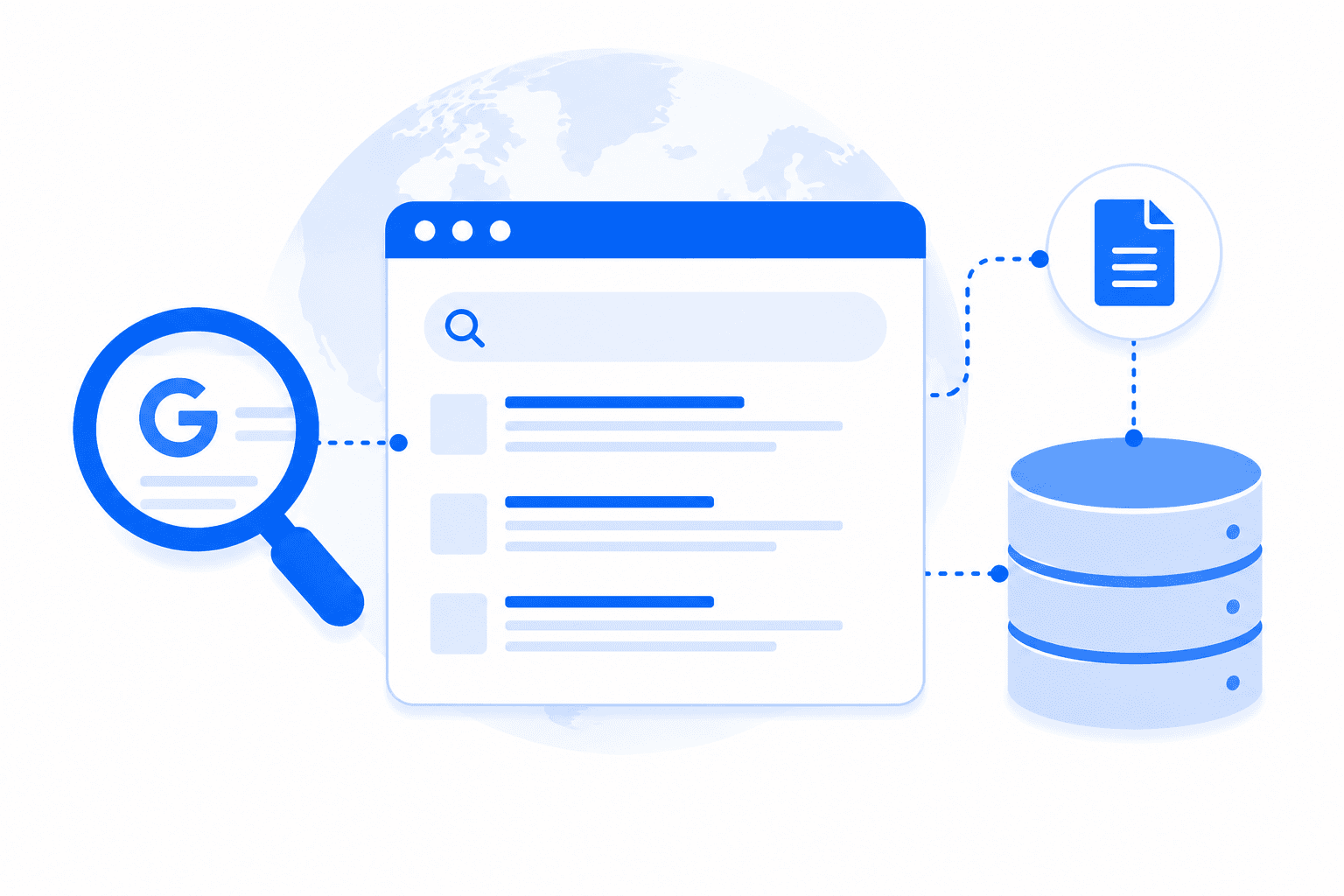
LLM data collection is the process of gathering public web content and structured records for language model workflows. Teams may build training corpora, retrieval indexes, evaluation sets, enrichment databases or domain-specific knowledge collections. The data usually needs cleaning, deduplication, filtering and source metadata before it becomes useful for fine-tuning, RAG or analytics.
Common public web inputs that teams collect and prepare for corpora, retrieval, evaluation or enrichment pipelines.
Collect public documentation, articles, help pages, guides, FAQs and knowledge-base content for text corpora.
Gather domain-specific public pages, product records, technical references, policy text and structured listings.
Collect public discussions, questions, answers, reviews and comments for intent, sentiment or instruction examples.
Capture titles, summaries, snippets, timestamps, categories and URLs for retrieval indexes or evaluation sets.
LLM data pipelines can become narrow or stale when crawlers rely on one IP route, one region or one source access pattern. Proxies let teams distribute workers, collect localized content, preserve sessions for multi-step pages and refresh public corpora over time. That improves coverage before deduplication, filtering, labeling or indexing begins.
Collect public content across more domains, regions and languages instead of relying on one visible slice.
Revisit public sources to refresh RAG indexes, domain corpora, evaluation examples and metadata records.
Run crawlers, parsers and browser workers in parallel without concentrating traffic on one origin IP.
Collect localized pages, translated variants and country-specific content for broader language model datasets.
Docs, articles, forums, listings, metadata, reviews and domain pages
Geo targeting, rotation, source rules, session control and crawler distribution
Deduplicated text, source metadata, retrieval chunks and evaluation exports
Choose proxy type by source diversity, language coverage and how often LLM datasets or retrieval indexes need refreshes.
Residential proxies are the best default for LLM data collection because they support broad public source coverage, real-world IP diversity and regional access. They help collect documents, discussions, listings and metadata across many domains without relying on one datacenter route.
Use residential proxies when corpus quality depends on source variety, language coverage or repeated refreshes. They fit public web corpora, RAG data collection, evaluation datasets and domain-specific knowledge pipelines where missing records weaken downstream results.
Use datacenter proxies for open documentation, public APIs, bulk fetches and tolerant sources with low block risk.
Best forUse static ISP proxies when collection needs stable identity, long browsing paths or repeated source checks.
Best forUse mobile proxies for social, mobile-first, app-adjacent or carrier-dependent public content used in LLM datasets.
Best forAI training data proxies are proxies used to collect public web data for machine learning, AI datasets, LLM training data, model evaluation, and data enrichment. They help data teams gather information from many public sources without relying on one IP address. This is useful for large-scale dataset building where request volume and location coverage matter.
AI teams need proxies for web data collection because collecting public data at scale can trigger rate limits, geo restrictions, or IP-based blocks. Proxies distribute requests across multiple IPs and locations, making large crawling jobs more stable. They are especially useful for multilingual datasets, regional datasets, and public web corpus collection.
The best proxies for LLM training data collection are usually rotating residential proxies when the data sources are protected, location-sensitive, or likely to block datacenter traffic. Datacenter proxies can be used for simple, open, high-speed sources. For broad public web collection, many teams combine proxy types depending on source difficulty and cost.
Yes. Geo-targeted proxies can help collect multilingual AI datasets by accessing content from specific countries, regions, and language markets. This is useful for training and evaluating models on local language, regional vocabulary, search results, product data, forums, and public content. Location targeting can improve dataset diversity and coverage.
Proxies help machine learning teams collect public web data by distributing crawler requests and allowing access from different regions. This improves reliability when gathering pages, metadata, public listings, search results, and other open web signals. The collected data still needs filtering, deduplication, cleaning, licensing review, and quality control.
Residential proxies are useful for AI dataset scraping when sources are sensitive to repeated requests or datacenter traffic. They can make data collection more stable across many websites and markets. For less protected sources, datacenter proxies may be faster and cheaper, so the right proxy type depends on the dataset source list.
Yes. Proxies can help with LLM evaluation and model testing when teams need to compare search results, public web pages, regional content, or localized responses from different markets. They are also useful for checking data availability and regional content differences. This can support benchmark creation, retrieval testing, and AI product QA.
For AI data collection, rotating proxies are usually best for crawling many pages or sources at scale. Sticky sessions may be needed for websites that require session continuity, cookies, or multi-step navigation. The best rotation strategy depends on request volume, crawl depth, target sensitivity, and dataset requirements.
No. Proxies do not guarantee access to every public data source. Access can depend on robots rules, website policies, anti-bot systems, browser fingerprint, request behavior, rate limits, and legal constraints. Proxies are only one part of an AI data collection pipeline.
AI teams should consider data quality, legality, source permissions, robots rules, privacy, copyright, deduplication, bias, and dataset documentation. Proxies can help with access and scale, but they do not solve compliance or data governance. A strong AI training data pipeline needs both reliable infrastructure and responsible data handling.
Start with Residential proxies for source diversity and language coverage, add Datacenter proxies for open bulk sources, or use Static ISP for stable repeat sampling.