
 Sign up
Product Data
Prices, inventory and catalogs
Collect structured product records, price updates, stock changes, catalog fields and seller or marketplace data.
Collect public and permitted API data through distributed proxy routes for polling, enrichment and monitoring jobs.
API data collection often runs on schedules: polling endpoints, refreshing records, enriching entities or comparing regional responses. Use proxies to distribute worker traffic, separate request pools, reach geo-specific endpoints and avoid making every API job depend on one server IP.
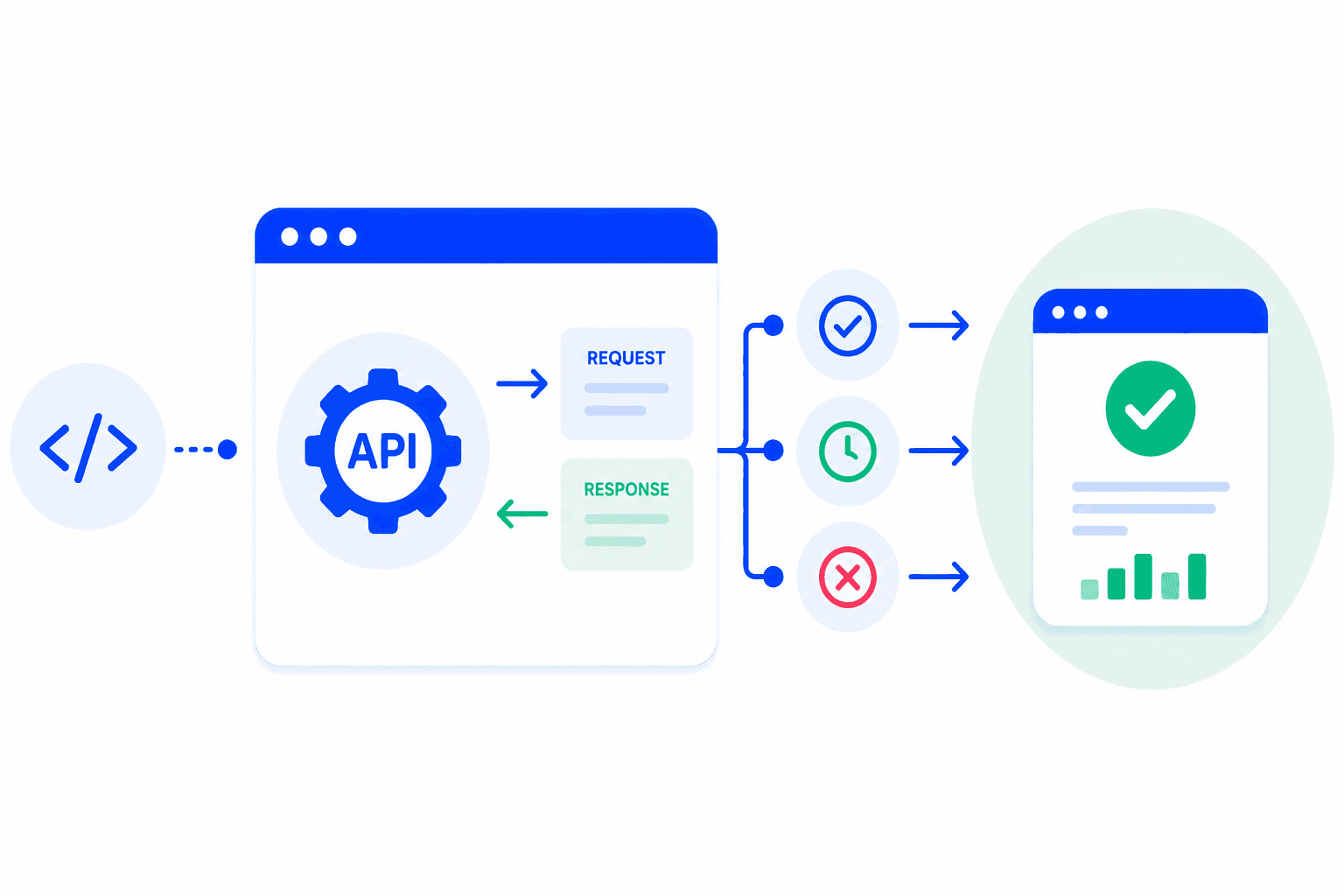
API data collection is the process of gathering structured information from public, partner or otherwise permitted endpoints. Teams use API workers to poll records, refresh prices, enrich databases, monitor changes and normalize responses into internal systems. A proxy layer helps distribute those requests across regions, workers and sessions instead of routing every job through one IP address.
Common public or permitted API workflows where proxy routing helps distribute requests and manage regional responses.
Collect structured product records, price updates, stock changes, catalog fields and seller or marketplace data.
Enrich internal systems with company profiles, business records, locations, categories and public entity metadata.
Poll endpoints for public events, listings, availability, changes, alerts or time-sensitive updates.
Compare public API responses that vary by country, city, language, currency or regional endpoint behavior.
API collection pipelines can hit bottlenecks when all polling, enrichment and monitoring workers use one server IP. Proxies help split traffic by job, endpoint, region or session, making it easier to manage throughput and compare regional responses. They also help isolate failures so one worker path does not affect every scheduled API job.
Spread API polling and enrichment jobs across multiple IP routes instead of one shared server address.
Request public endpoints from specific countries to compare localized prices, content or availability.
Keep request pools, tokens, cookies or permitted account contexts isolated by job or source.
Route retries through controlled proxy pools so failed endpoint checks do not overload one connection.
Public endpoints, partner APIs, permitted feeds and scheduled polling queues
Worker routing, geo targeting, session separation and retry control
Normalized JSON, enriched entities, alerts and warehouse-ready updates
Choose proxy type by API sensitivity, throughput target, regional response needs and session requirements.
Datacenter proxies are often the best starting point for API data collection because they are fast, predictable and cost-efficient for structured endpoints. They work well for public APIs, permitted feeds, monitoring jobs and high-volume polling where IP reputation is not the main constraint.
Use datacenter proxies when your API collection pipeline needs throughput, stable networking and a lower cost-per-request. For stricter or location-sensitive APIs, combine them with Residential or Static ISP routes where higher trust or regional access matters.
Use residential proxies for APIs or public endpoints where geo context, IP reputation or regional responses matter.
Best forUse static ISP proxies when API jobs need stable identity, long-lived sessions or repeated requests from one IP.
Best forUse mobile proxies for mobile-app-adjacent endpoints, carrier-specific API behavior or mobile-only public data.
Best forThe best proxies for web scraping are usually rotating residential proxies because they provide access to real residential IP addresses and help reduce blocks, rate limits, and IP-based restrictions. For large-scale data collection, residential proxies are useful when websites apply anti-bot checks, geo restrictions, or aggressive request limits. Datacenter proxies can also work for simpler websites with lower protection.
You need proxies for web scraping because many websites limit how many requests can come from the same IP address. Without proxies, your scraper can quickly get blocked, throttled, or shown incorrect content. A proxy network lets you distribute requests across multiple IPs, scrape from different locations, and collect public web data more reliably.
Yes. Rotating residential proxies are one of the strongest options for web scraping because each request or session can use a different residential IP. This helps scrapers avoid repeated requests from one address, reduces ban risk, and improves access to websites that treat datacenter traffic more strictly. They are especially useful for e-commerce, SERP, travel, real estate, and market research scraping.
Residential proxies use IP addresses associated with real internet service providers, while datacenter proxies come from hosting providers and cloud infrastructure. For web scraping, residential proxies usually perform better on protected websites because they look more like normal user traffic. Datacenter proxies are faster and cheaper, but they are easier for anti-bot systems to detect and block.
Proxies help avoid IP bans by spreading scraping requests across many IP addresses instead of sending all traffic from one source. With rotating proxies, your scraper can change IPs automatically after each request, after a set time, or when a session ends. This reduces repeated patterns and helps maintain stable access during large-scale data collection.
Yes. With geo-targeted proxies, you can scrape websites from specific countries, regions, or cities. This is important when websites show different prices, search results, availability, ads, or localized content based on user location. Geo-targeted web scraping proxies are commonly used for price monitoring, SEO tracking, travel data, marketplace research, and regional content checks.
For most scraping tasks, the best setup is rotating residential proxies with sticky sessions when needed. Fast rotation works well for crawling many pages, while sticky sessions are better when a website requires cookies, login state, cart behavior, or multi-step navigation. The right proxy settings depend on the target website, request volume, session logic, and anti-bot protection level.
Yes. Proxies are widely used for e-commerce scraping, price monitoring, stock tracking, and marketplace data collection. Many online stores show different prices, delivery options, or product availability depending on location. Using residential proxies with country or city targeting helps collect more accurate pricing data and reduces the risk of blocks during repeated product page scraping.
No proxy provider can guarantee that every scraper will work on every website. Blocking depends not only on the proxy IP, but also on request behavior, headers, browser fingerprint, cookies, scraping speed, JavaScript execution, and the target website’s anti-bot system. Proxies are a critical part of a scraping setup, but they should be combined with clean scraper logic and realistic traffic patterns.
For large-scale data collection, start with rotating residential proxies if the target websites are protected, geo-restricted, or sensitive to repeated requests. Use datacenter proxies for simple, high-speed scraping where anti-bot protection is weak. For browser automation or login-based scraping, use sticky sessions so the same IP can stay active during the full workflow.
Start with Datacenter proxies for fast public API polling, add Residential proxies for regional endpoints, or use Static ISP when stable sessions and repeat checks matter.