
 Sign up
Market Data
Prices, products and offers
Collect product catalogs, prices, promotions, seller offers, reviews and stock signals across many storefronts.
Scale public web data collection across thousands of pages, regions and crawler jobs without relying on one IP path.
Large-scale data collection needs more than raw request volume. Use proxies to distribute traffic across IP pools, control rotation by source, keep parallel crawlers stable and reduce failed retries when public websites apply rate limits, geo logic or basic bot filtering.
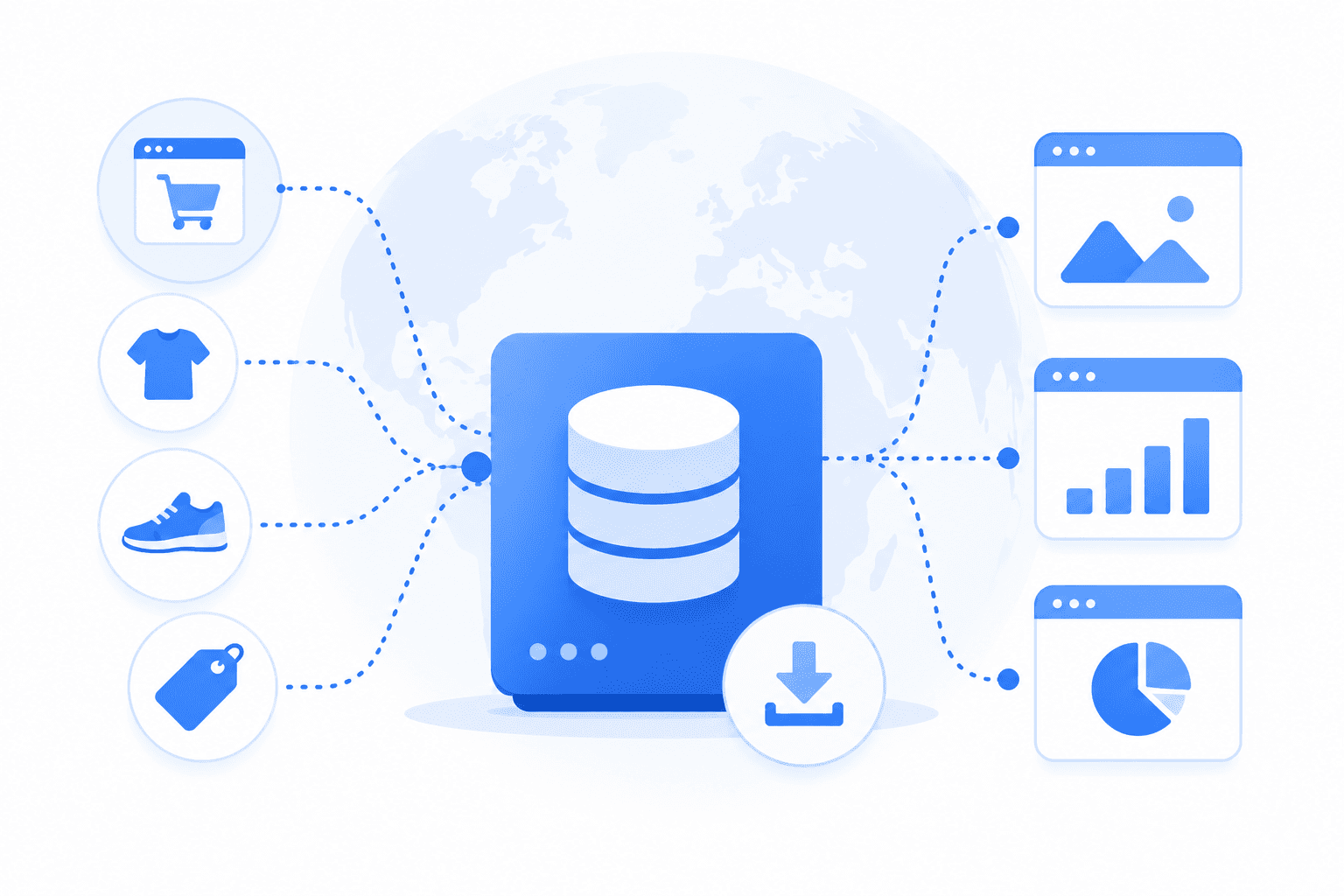
Large-scale data collection is the process of gathering public web data across many pages, sources, regions or update cycles. Instead of one scraper visiting one website, teams run parallel workers, queues, browser sessions and scheduled refreshes. A proxy layer helps those systems avoid single-IP bottlenecks, keep source-specific rules separate and collect enough successful responses to build complete datasets.
Common high-volume collection targets where proxy routing, rotation and regional coverage affect dataset completeness.
Collect product catalogs, prices, promotions, seller offers, reviews and stock signals across many storefronts.
Build large datasets from company profiles, local listings, branch pages, categories and public directory search results.
Monitor many search pages, news sources, public articles, metadata and landing pages across markets.
Refresh large listing indexes from job boards, real estate sites, event directories and public marketplaces.
Scaling collection through one server IP quickly creates bottlenecks: rate limits, repeated blocks, biased regional views and fragile retry loops. Proxies let teams split workloads across many IPs, assign the right route to each source and tune sessions for crawlers, APIs or headless browsers. That turns scale into controlled throughput instead of noisy request volume.
Run more workers in parallel by spreading requests across a managed proxy pool instead of one origin IP.
Use sticky sessions, rotating IPs or source-specific rules depending on how each public website responds.
Reduce failed requests, blocked sessions and repeated retries that make large datasets expensive to refresh.
Collect localized pages, prices and listings from multiple countries without running separate servers in each region.
URLs, search pages, catalogs, listings, APIs and scheduled refresh jobs
Rotation rules, geo targeting, sticky sessions and parallel worker routing
Validated records, deduplicated exports and warehouse-ready public data
Choose the proxy route by source sensitivity, throughput target and cost-per-success. High volume works best when IP type matches the job.
Residential proxies are the safest default for large-scale public data collection when sources vary by location, apply rate limits or treat datacenter traffic aggressively. They give crawler fleets broad IP diversity and help maintain access across marketplaces, directories, listings and search pages.
Use residential proxies when the dataset must stay complete across regions and repeated refreshes. They are especially useful when collection jobs combine normal HTTP scraping, headless browser sessions and many source domains in the same pipeline.
Use datacenter proxies for high-throughput collection from tolerant sources, public APIs and open pages with light filtering.
Best forUse static ISP proxies when large jobs need stable identity, long sessions or repeated checks from the same trusted IP.
Best forUse mobile proxies for high-sensitivity sources, mobile-first pages, carrier-specific results and social or app-adjacent data.
Best forThe best proxies for web scraping are usually rotating residential proxies because they provide access to real residential IP addresses and help reduce blocks, rate limits, and IP-based restrictions. For large-scale data collection, residential proxies are useful when websites apply anti-bot checks, geo restrictions, or aggressive request limits. Datacenter proxies can also work for simpler websites with lower protection.
You need proxies for web scraping because many websites limit how many requests can come from the same IP address. Without proxies, your scraper can quickly get blocked, throttled, or shown incorrect content. A proxy network lets you distribute requests across multiple IPs, scrape from different locations, and collect public web data more reliably.
Yes. Rotating residential proxies are one of the strongest options for web scraping because each request or session can use a different residential IP. This helps scrapers avoid repeated requests from one address, reduces ban risk, and improves access to websites that treat datacenter traffic more strictly. They are especially useful for e-commerce, SERP, travel, real estate, and market research scraping.
Residential proxies use IP addresses associated with real internet service providers, while datacenter proxies come from hosting providers and cloud infrastructure. For web scraping, residential proxies usually perform better on protected websites because they look more like normal user traffic. Datacenter proxies are faster and cheaper, but they are easier for anti-bot systems to detect and block.
Proxies help avoid IP bans by spreading scraping requests across many IP addresses instead of sending all traffic from one source. With rotating proxies, your scraper can change IPs automatically after each request, after a set time, or when a session ends. This reduces repeated patterns and helps maintain stable access during large-scale data collection.
Yes. With geo-targeted proxies, you can scrape websites from specific countries, regions, or cities. This is important when websites show different prices, search results, availability, ads, or localized content based on user location. Geo-targeted web scraping proxies are commonly used for price monitoring, SEO tracking, travel data, marketplace research, and regional content checks.
For most scraping tasks, the best setup is rotating residential proxies with sticky sessions when needed. Fast rotation works well for crawling many pages, while sticky sessions are better when a website requires cookies, login state, cart behavior, or multi-step navigation. The right proxy settings depend on the target website, request volume, session logic, and anti-bot protection level.
Yes. Proxies are widely used for e-commerce scraping, price monitoring, stock tracking, and marketplace data collection. Many online stores show different prices, delivery options, or product availability depending on location. Using residential proxies with country or city targeting helps collect more accurate pricing data and reduces the risk of blocks during repeated product page scraping.
No proxy provider can guarantee that every scraper will work on every website. Blocking depends not only on the proxy IP, but also on request behavior, headers, browser fingerprint, cookies, scraping speed, JavaScript execution, and the target website’s anti-bot system. Proxies are a critical part of a scraping setup, but they should be combined with clean scraper logic and realistic traffic patterns.
For large-scale data collection, start with rotating residential proxies if the target websites are protected, geo-restricted, or sensitive to repeated requests. Use datacenter proxies for simple, high-speed scraping where anti-bot protection is weak. For browser automation or login-based scraping, use sticky sessions so the same IP can stay active during the full workflow.
Start with Residential proxies for broad source coverage, add Datacenter proxies for tolerant high-volume jobs, or use Static ISP for long-running sessions that need stable identity.