
 Sign up
Cross-Browser
Chromium, Firefox, and WebKit testing
Run the same user journey across browsers while routing each project through controlled proxy settings.
Run Playwright browser contexts through controlled proxy locations and sessions.
Playwright is built for reliable browser automation across Chromium, Firefox, and WebKit. Proxies make Playwright workflows more useful for geo testing, localization QA, screenshot capture, account separation, public data collection, and multi-region browser monitoring.
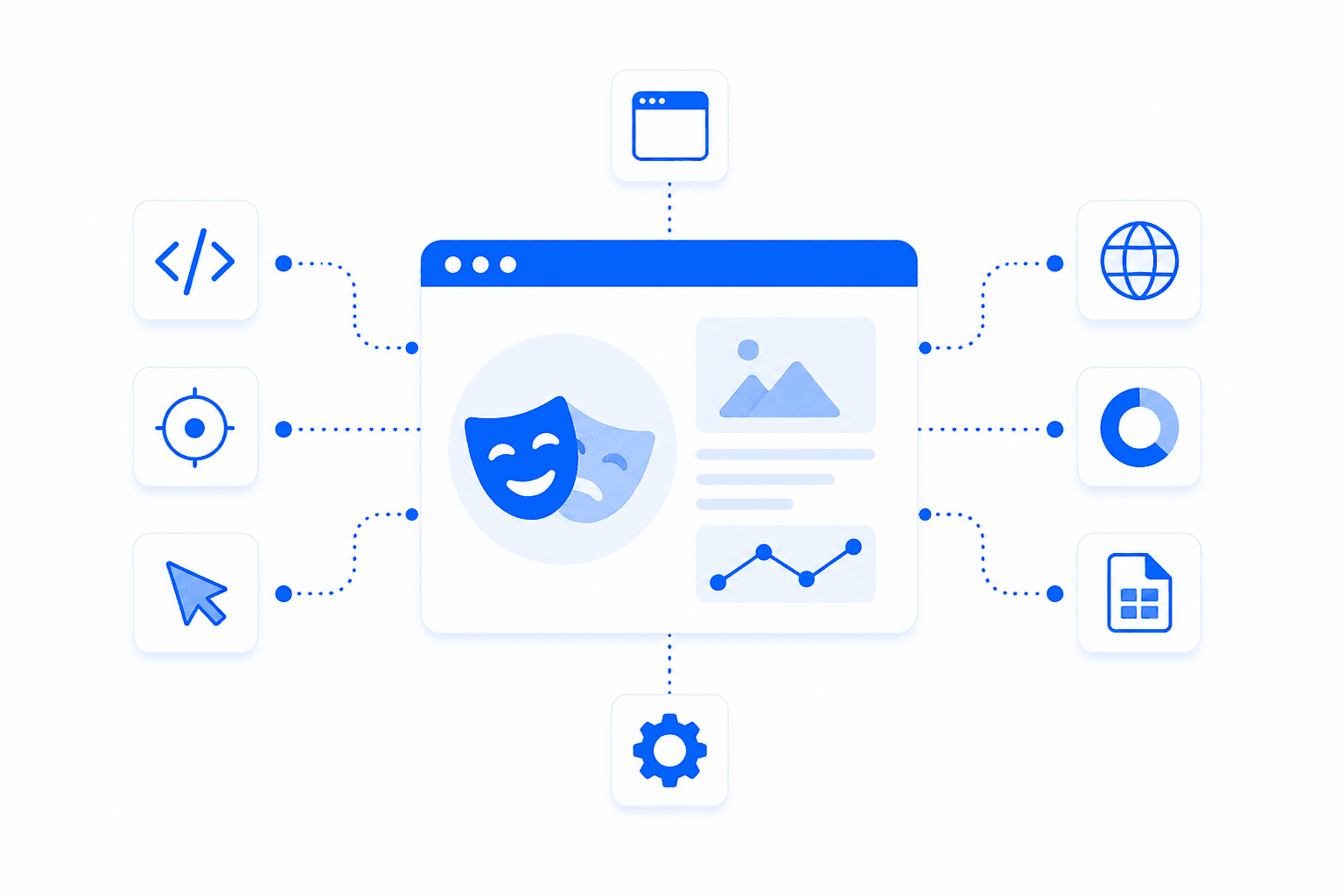
Playwright automation with proxies means routing browser contexts or test projects through proxy servers while Playwright controls the browser. Developers and QA teams use this setup to test localized user flows, capture screenshots, automate forms, validate pages across regions, and collect public data from JavaScript-heavy websites. Proxy support helps each context behave like a user from a chosen network location.
Playwright is especially strong when teams need repeatable browser tests across contexts and projects.
Run the same user journey across browsers while routing each project through controlled proxy settings.
Test redirects, language, currency, pricing, and market-specific content from selected proxy countries.
Capture consistent browser screenshots for page states, localized UI, ads, SERPs, and landing pages.
Use Playwright to render JavaScript pages and collect structured public data through stable proxy sessions.
Playwright can route browser traffic through proxies at the browser or context level. That makes it useful for parallel tests, country-specific browser projects, account isolation, and repeatable monitoring. Teams can choose sticky sessions for flows that depend on state or rotating sessions for broader URL coverage.
Assign proxy settings to browser contexts so tests can run in separate network environments.
Run different markets, accounts, or browser projects at the same time with separate proxy routes.
Reproduce regional redirects, content, and pricing through selected proxy locations.
Use proxies in Playwright test pipelines, scheduled monitors, and screenshot workers.
Choose proxy locations and session rules.
Configure Playwright browser or context proxy settings.
Run tests, screenshots, or data collection jobs.
Compare results by browser, location, account, or environment.
Playwright proxy choice depends on whether the job is QA-heavy, data-heavy, or mobile-like.
Residential proxies are a strong default for Playwright because they provide realistic IPs, geo targeting, and session control for public websites and localized browser tests.
Best for fast QA runs, internal monitoring, and cost-effective browser tests at higher volume.
Best forUseful for mobile web testing, app landing pages, and experiences that react to cellular traffic.
Best forGood for allowlisted staging, persistent test accounts, and repeatable Playwright contexts.
Best forBrowser automation proxies are proxies used with automated browsers, headless browsers, QA tools, and testing frameworks such as Puppeteer, Playwright, Selenium, and anti-detect browser environments. They route browser traffic through different IP addresses and locations. This helps test websites, workflows, and localized user experiences more realistically.
Automated browsers need proxies when they must test from different locations, avoid relying on one IP address, or run parallel sessions with separate network identities. Without proxies, many browser automation tasks come from the same source IP, which can cause rate limits or inaccurate regional results. Proxies are especially useful for QA testing, web scraping, and localization checks.
The best proxies for Puppeteer and Playwright depend on the target website and test type. Residential proxies are usually better for protected websites and location-sensitive tests, while datacenter proxies can work for simple QA or high-speed internal checks. Sticky sessions are useful when a browser flow needs cookies, login state, or multi-step navigation.
Yes. Proxies can be used with Selenium to test websites from different IP addresses, countries, cities, or network types. This is useful for localization testing, form testing, pricing checks, search result validation, and regional QA. The proxy setup should match the browser profile, session length, and test scenario.
Rotating proxies are good for browser automation when each test or browsing session can use a separate IP address. However, very fast rotation can break flows that rely on cookies, authentication, carts, or multi-step navigation. For browser automation with session logic, sticky residential proxies are often more stable than per-request rotation.
For headless browsers, the best proxy settings depend on whether the task is crawling, testing, or account-based navigation. Large crawling jobs often use rotating proxies, while login flows and checkout tests usually need sticky sessions. Browser fingerprint, headers, cookies, viewport, and JavaScript behavior should also match the test goal.
Yes. Proxies help QA teams test websites from different regions, verify localized content, check redirects, compare prices, test forms, and validate user flows. They also help find bugs that only appear in specific countries or network conditions. This makes proxies useful for web QA, localization QA, and browser automation testing.
Yes. Proxies are useful for parallel browser sessions because each session can run through a separate IP address or location. This helps isolate tests, reduce cross-session interference, and simulate users from different markets. For stable results, each session should use consistent proxy, cookie, and browser profile settings.
No. Proxies do not make browser automation undetectable. Websites can also evaluate browser fingerprint, automation signals, JavaScript behavior, timing, cookies, headers, and user interaction patterns. Proxies help with the network layer, but reliable automation also requires clean browser configuration and realistic behavior.
Choose residential proxies for protected websites, location-sensitive workflows, and realistic regional testing. Choose datacenter proxies for simple, high-speed QA on less protected websites. Use sticky sessions for logins and multi-step flows, and rotating proxies for large-scale crawling or independent browser sessions.
Use Proxxxymiron proxies for Playwright automation, browser QA, geo testing, screenshots, and public web data workflows.