
 Sign up
Text Data
Articles, pages and documents
Collect public text from articles, documentation, landing pages, knowledge bases and other readable web sources.
Collect public web data for AI datasets with reliable proxy routing, source diversity and repeatable refresh workflows.
AI dataset collection needs consistent access to public sources, not one-off scraping bursts. Use proxies to gather pages, documents, listings, reviews and metadata across regions, reduce single-IP limits and keep training, evaluation or enrichment datasets fresh over time.
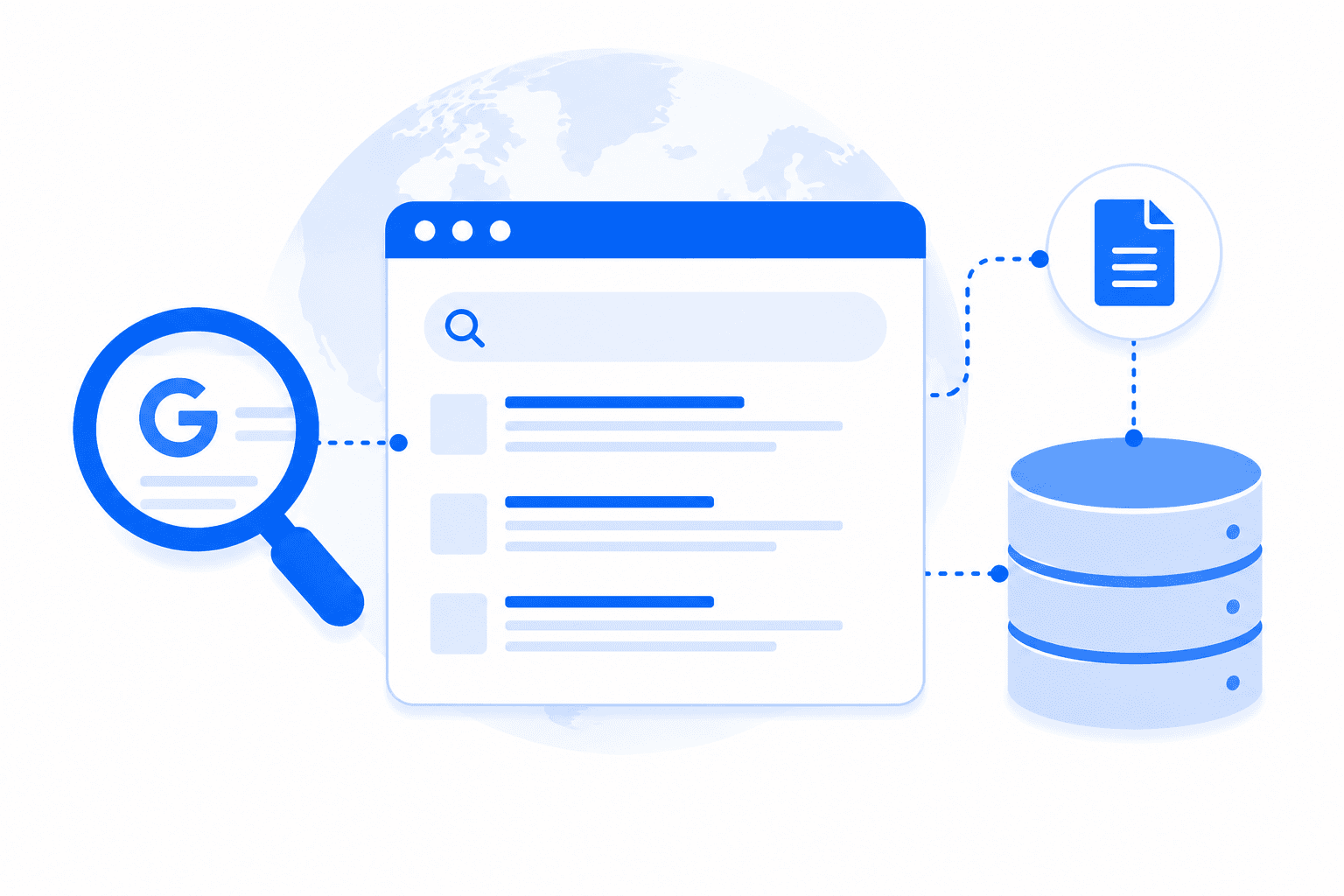
AI dataset collection is the process of gathering public data that can support model training, evaluation, retrieval systems, enrichment or analytics. Teams collect documents, product pages, reviews, listings, metadata and public text, then clean, deduplicate, label or transform it. A proxy layer helps make the collection process broader, more repeatable and less dependent on one network path.
Common public web inputs that teams collect and prepare for training, evaluation, retrieval or enrichment pipelines.
Collect public text from articles, documentation, landing pages, knowledge bases and other readable web sources.
Gather structured public data from listings, product catalogs, company directories, tables and profile pages.
Collect public reviews, ratings, comments, questions and discussion snippets for sentiment or classification tasks.
Capture titles, snippets, categories, language signals, timestamps and source context for filtering and evaluation.
AI datasets can become biased when collection depends on one server location, one request pattern or a narrow set of accessible pages. Proxies let teams gather public data across regions, distribute crawler workers, preserve sessions for multi-step sources and refresh datasets without overloading one IP. That improves coverage before data moves into cleaning or labeling.
Collect from more public sources, languages and regions instead of overrepresenting one visible slice of the web.
Revisit public sources on a schedule to update model datasets, evaluation sets or retrieval indexes.
Run crawlers, parsers and browser sessions in parallel without forcing all traffic through one connection.
Collect localized pages, language variants and market-specific examples for broader dataset coverage.
Documents, listings, reviews, catalogs, metadata and public text pages
Geo targeting, rotation, source rules, session control and worker distribution
Cleaned records, deduplicated samples, labels and model-ready exports
Choose proxy type by source diversity, dataset freshness and how sensitive public sources are to repeated collection.
Residential proxies are the best default for AI dataset collection because they provide broad IP diversity and regional coverage. They help teams collect public pages, listings, documents and metadata from many source domains without relying on one datacenter route.
Use residential proxies when dataset coverage, language variety or repeated refreshes matter. They fit training data collection, evaluation datasets, retrieval corpora and enrichment workflows where missing or region-biased records reduce downstream quality.
Use datacenter proxies for open datasets, public APIs and tolerant sources where low-cost volume matters.
Best forUse static ISP proxies when AI data sources need stable sessions, repeated checks or consistent collection identity.
Best forUse mobile proxies for mobile-first content, social signals, app-adjacent pages and carrier-specific public data.
Best for用于 AI 和 LLM 的代理可以采集公开网页数据,用于机器学习、AI 数据集、LLM 训练数据、模型评估和数据增强。它们帮助数据团队从许多公开来源采集信息,而不依赖单一 IP。对于请求量和地理覆盖范围都很重要的大型数据集,这很有用。
AI 团队需要代理,是因为大规模采集公开数据可能触发请求限制、地理限制或基于 IP 的封禁。代理会把请求分散到多个 IP 和位置,让大型爬取任务更加稳定。它们尤其适用于多语言数据集、区域数据集和公开网页语料采集。
如果数据来源有防护、依赖位置,或可能限制数据中心流量,采集 LLM 训练数据通常适合使用轮换住宅代理。数据中心代理可以用于简单、开放、高速的来源。对于广泛的公开网页采集,许多团队会根据来源难度和成本组合使用不同代理类型。
可以。支持地理定位的代理可以访问特定国家、地区和语言市场的内容,从而帮助采集多语言 AI 数据集。这对于使用本地语言、区域词汇、搜索结果、商品数据、论坛和公开内容训练及评估模型很有用。按位置定位可以提升数据集的多样性和覆盖范围。
代理通过分散爬虫请求,并允许从不同地区访问来源,帮助 ML 团队采集公开网页数据。这可以提升采集页面、元数据、公开列表、搜索结果和其他开放网页信号时的稳定性。采集到的数据仍然需要过滤、去重、清洗、许可证检查和质量控制。
当数据来源对重复请求或数据中心流量敏感时,住宅代理适合 AI 数据集抓取。它们可以让跨多个网站和市场的数据采集更加稳定。对于防护较低的来源,数据中心代理可能更快、更便宜,因此正确的代理类型取决于数据集来源列表。
可以。当团队需要比较不同市场中的搜索结果、公开网页、区域内容或本地化响应时,代理可以帮助进行 LLM 评估和模型测试。它们也适合检查数据可用性和区域内容差异。这可以支持 benchmark 创建、检索场景测试和 AI 产品 QA。
对于 AI 数据采集,轮换代理通常更适合大规模爬取大量页面或来源。对于需要会话连续性、cookies 或多步骤导航的网站,可能需要 sticky 会话。最佳轮换策略取决于请求量、爬取深度、目标敏感度和数据集要求。
不能。代理不能保证访问所有公开数据来源。访问可能取决于 robots.txt、网站政策、反机器人系统、浏览器指纹、请求行为、请求限制和法律约束。代理只是 AI 数据采集管线中的一部分。
AI 团队应考虑数据质量、合法性、来源许可、robots.txt、隐私、版权、去重、偏差和数据集文档。代理可以帮助访问和扩展规模,但不能解决合规或数据治理问题。稳健的训练数据管线既需要可靠基础设施,也需要负责任的数据处理。
Start with Residential proxies for source diversity and regional coverage, add Datacenter proxies for open bulk sources, or use Static ISP for stable repeat sampling.