
 Sign up
Position
Keyword positions
Track rank position, URL, domain, title, and ranking changes over time.
Monitor keyword positions across search engines, locations, devices, and SERP features.
Rank tracking checks where pages appear for target keywords over time. Proxies help SEO tools collect ranking data from the correct location and reduce bias from repeated checks through one server IP.
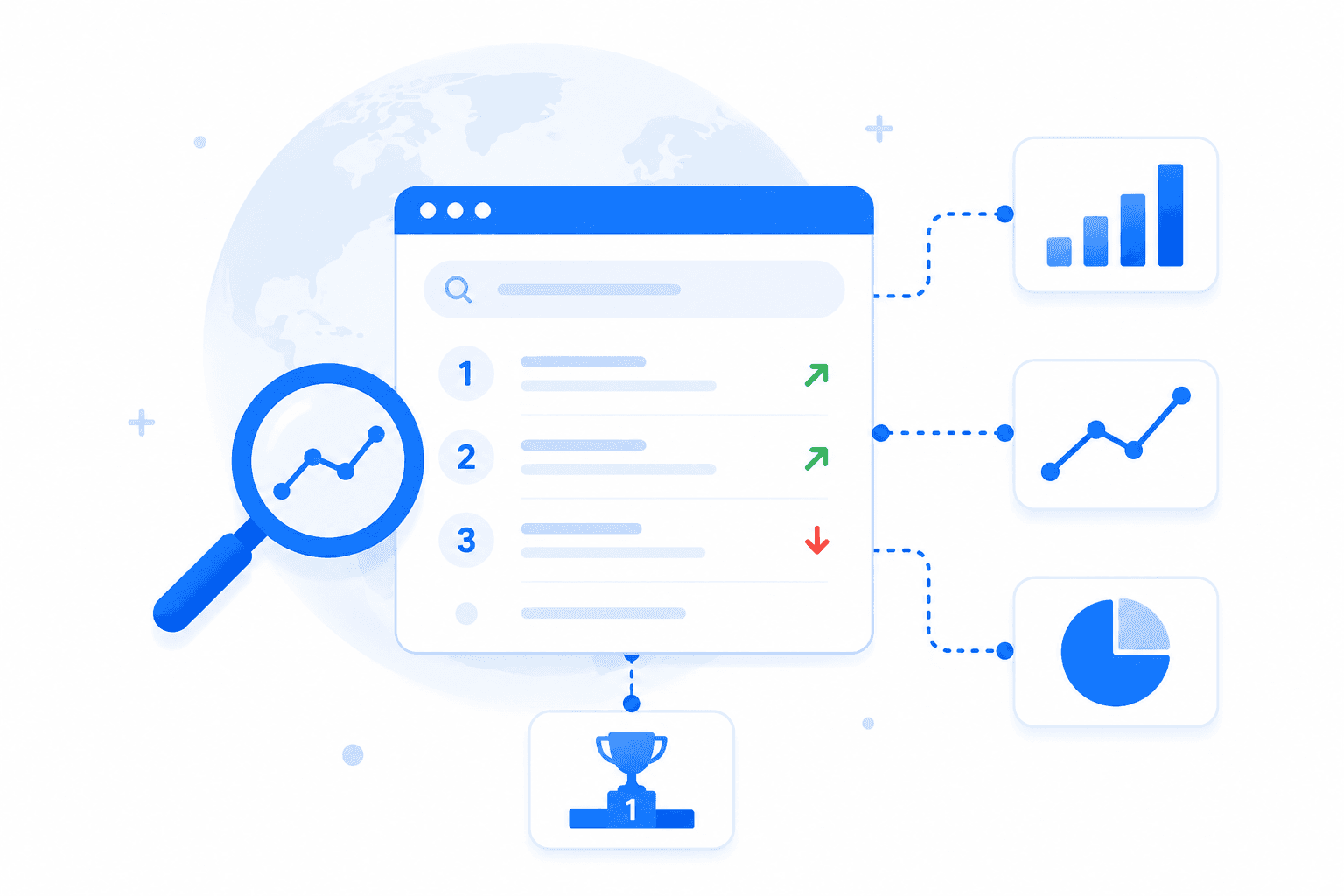
Rank tracking is the process of checking search engine positions for target keywords and URLs over time. SEO teams use it to measure organic visibility, spot ranking drops, compare competitors, and report performance by market. This page should target rank tracking proxies, keyword ranking proxies, local rank tracking, and geo-specific SERP monitoring.
Rank tracking combines positions, pages, features, and market context.
Track rank position, URL, domain, title, and ranking changes over time.
Compare visibility by location, language, device, and search engine.
Monitor featured snippets, local packs, images, videos, and shopping modules.
Track which competing domains gain or lose positions for priority keywords.
Search rankings are not universal. The same keyword can show different results by country, city, language, device, and search history. Proxies help rank tracking tools request SERPs from target locations, distribute repeated keyword checks, and keep reporting consistent across large keyword sets.
Check positions from the same country or city as your target audience.
Run thousands of keyword checks without depending on a single IP.
Compare desktop and mobile ranking views when layouts differ.
Keep daily and weekly rank checks consistent across campaigns.
Keywords, target URLs, competitors, search locations, and devices.
Residential Pro proxies route rank checks through chosen markets.
Positions, changes, SERP features, competitors, and visibility trends.
Rank tracking depends on accurate search location, repeatability, and enough scale for large keyword sets.
Residential Pro proxies are ideal for rank tracking because they support precise geographic and network targeting. That makes ranking reports more useful for country, city, and local SEO campaigns.
Use them when search engines personalize results and when reporting needs to distinguish real ranking movement from location bias.
Good for country-level rank tracking and general SEO monitoring workflows.
Best forUseful when mobile rankings, carrier context, or mobile-first SERPs matter.
Best forUseful for internal tests and low-risk search sources where speed matters.
Best forSEO 代理用于采集搜索结果、跟踪关键词排名、审计本地 SERP、监控竞争对手,以及从不同位置分析搜索可见性。在 SERP 分析中,代理可以帮助 SEO 工具通过不同 IP 和地区发送查询,避免依赖一个可能被封禁或限速的 IP。
SEO 工具需要代理,是因为搜索引擎可能会限制来自同一个 IP 的重复查询。代理可以把关键词检查分散到不同 IP 和位置,这对于大规模跟踪排名、摘要、local pack、广告和自然结果很重要。这尤其适合代理商、SERP 监控平台和企业内部 SEO 团队。
抓取 Google 搜索结果时,通常更适合使用高质量住宅代理,并配合位置定位和可控轮换。Google SERP 数据会受位置、语言、设备和查询行为影响,因此代理配置应匹配具体 SEO 任务。对于简单的关键词检查,数据中心代理可能够用;但对于较大或较敏感的 SERP 任务,住宅代理通常更稳定。
可以。支持地理定位的代理可以从指定国家、地区、城市或本地市场检查搜索结果,从而帮助跟踪本地 SEO 排名。这很重要,因为 Google 结果会根据用户位置发生明显变化。它们适用于跟踪 local pack、本地商家、城市级排名、区域广告和本地化摘要。
代理可以让 SEO 工具从正确地区采集搜索结果,并避免依赖单一 IP,从而提高 SERP 抓取的准确性。由于 SERP 会个性化并受位置影响,错误的 IP 可能会产生误导性的排名数据。支持地理定位的代理可以帮助 SEO 团队看到更接近特定位置真实用户看到的搜索结果。
可以。代理可以支持竞争对手 SEO 分析:采集公开 SERP 数据、竞争对手排名、关键词位置、广告展示位置和不同市场中的搜索结果元素。这可以帮助团队比较自然可见性、监控内容变化,并发现不同地区的机会。结果质量取决于代理位置、查询量和 SEO 工具配置。
对于高级 SEO 监控,住宅代理通常更合适,因为流量更接近普通用户,也更自然地支持地理定位。数据中心代理通常更快、更便宜,但搜索引擎可能更容易限制或封禁它们。对于敏感 SERP 抓取、关键词跟踪和本地 SEO,住宅代理通常是更稳妥的选择。
可以。代理可以用于检查搜索广告、赞助结果、本地广告可见性,以及不同地区的竞争对手广告展示位置。广告结果可能会因国家、城市、语言和设备而变化,因此支持地理定位的代理可以帮助广告主检查广告活动在目标市场中的展示方式。这适用于 PPC 审计、品牌保护和竞争广告监控。
对于 SEO 和 SERP 抓取,轮换代理通常更适合大批量关键词列表,而 sticky 会话适合需要稳定性的流程。最佳设置取决于关键词数量、目标搜索引擎、检查频率和反机器人敏感度。相比从同一个 IP 进行激进抓取,更慢、更真实的查询模式通常效果更好。
不能。SEO 代理可以提高位置准确性并减少基于 IP 的限制,但不能保证排名数据完全准确。搜索结果可能因个性化、设备类型、语言、cookies、搜索历史、数据中心差异和搜索引擎实验而变化。要获得可靠的 SERP 分析,代理还需要配合干净的查询逻辑和一致的跟踪方法。
Use proxies to collect ranking data from the right locations and devices so SEO reports reflect the markets you actually care about.