
 Sign up
Geo
Location-based API responses
Check whether responses, availability, prices, content, or rules change by request location.
Route API tests through controlled IPs to validate responses across locations and environments.
API testing verifies whether services respond correctly under different request conditions. Proxies add a network layer for checking geo-specific responses, authentication flows, rate limits, allowlists, third-party integrations, and public endpoint behavior from multiple IP contexts.
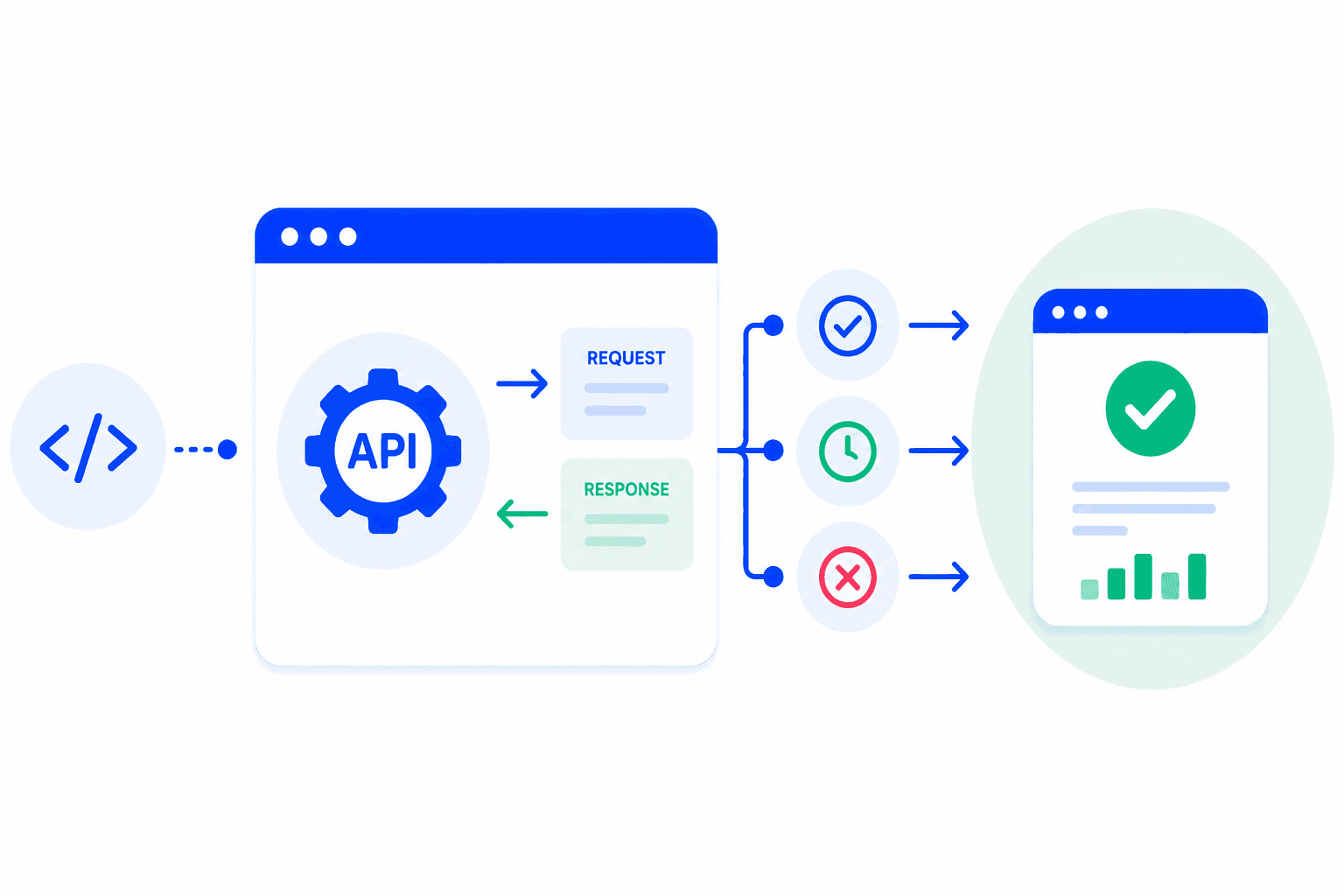
Proxy-based API testing sends API requests through selected proxy endpoints to validate how services behave from different IPs, regions, and network types. This is useful when APIs include location-aware logic, partner allowlists, rate limits, fraud checks, authentication flows, third-party integrations, or environment-specific routing. It also helps teams test proxy integrations before adding them to production data or automation pipelines.
Proxies are useful whenever request origin affects API behavior or reliability.
Check whether responses, availability, prices, content, or rules change by request location.
Validate token flows, login sequences, account checks, and session persistence through stable proxy routes.
Test how endpoints respond to retries, concurrency, rotation, temporary failures, and backoff behavior.
Confirm credentials, proxy protocols, timeout behavior, logging, and failover before production rollout.
Proxies let development and QA teams simulate requests from different locations and IP contexts without changing the API code. They also help validate proxy authentication, network resilience, and how applications behave when requests are routed through rotating or sticky sessions.
Send requests from selected countries, cities, or network types to test location-aware APIs.
Use sticky proxy sessions when API flows depend on cookies, tokens, or multi-step state.
Validate retry logic, proxy rotation, connection pooling, timeout handling, and error recovery.
Confirm that your application can authenticate and route requests through proxies reliably.
Define endpoints and expected network conditions.
Configure proxy credentials in the API client or test runner.
Run location, session, retry, and timeout tests.
Compare status codes, response bodies, logs, and failure patterns.
API tests often need speed, predictable behavior, and clear logging.
Datacenter proxies are often best for API testing because they are fast, cost-effective, and predictable for request-heavy QA and integration workflows.
Best for allowlisted APIs, persistent integrations, and tests that need one stable source IP.
Best forUseful when API behavior depends on consumer IP location or public regional access rules.
Best forHelpful for testing mobile app APIs, carrier-like traffic, and mobile-first service behavior.
Best for浏览器自动化代理用于自动化浏览器、headless 浏览器、QA 工具,以及 Puppeteer、Playwright、Selenium 和反检测浏览器等框架。它们会把浏览器流量通过不同 IP 和位置发送出去。这有助于更真实地测试网站、用户场景和本地化体验。
当需要从不同位置测试、不依赖单一 IP,或使用独立网络路径运行并行会话时,自动化浏览器需要代理。没有代理时,许多浏览器自动化任务都会从同一个 IP 发出,可能导致限制或不准确的区域结果。代理尤其适合 QA、网页抓取和本地化测试。
Puppeteer 和 Playwright 适合哪种代理,取决于目标网站和测试类型。住宅代理通常更适合受保护的网站和对位置敏感的测试,而数据中心代理适合简单 QA 或快速内部检查。当浏览器流程需要 cookies、登录状态或多步骤导航时,sticky 会话很有用。
可以。代理可以和 Selenium 一起使用,从不同 IP、国家、城市或网络类型测试网站。这适用于本地化测试、表单测试、价格检查、搜索结果验证和区域 QA。代理配置应匹配浏览器配置、会话时长和测试场景。
当每次测试或每个浏览器会话都可以使用单独 IP 时,轮换代理适合浏览器自动化。但过快轮换可能会破坏依赖 cookies、登录状态、购物车或多步骤导航的流程。对于带会话逻辑的浏览器自动化,sticky 住宅代理通常比按请求轮换更稳定。
对于 headless 浏览器,最佳配置取决于任务类型:爬取、测试,还是账号场景。大型爬取任务通常使用轮换代理,而登录场景和支付测试通常需要 sticky 会话。浏览器指纹、请求头、cookies、窗口尺寸和 JavaScript 行为也应匹配测试目标。
可以。代理可以帮助 QA 团队从不同地区测试网站、检查本地化内容、重定向、比较价格、测试表单并验证用户场景。它们也能帮助发现只在特定国家或网络条件下出现的 bug。因此,代理适用于网页 QA、本地化 QA 和浏览器自动化。
可以。代理适合并行浏览器会话,因为每个会话都可以通过不同 IP 或位置运行。这有助于隔离测试、减少会话之间的干扰,并模拟来自不同市场的用户。为了获得稳定结果,每个会话都应使用一致的代理、cookies 和浏览器配置。
不会。代理不会让浏览器自动化变得无法检测。网站还可能评估浏览器指纹、自动化信号、JavaScript 行为、响应时间、cookies、请求头和交互模式。代理可以帮助网络层,但可靠的自动化还需要干净的浏览器配置和更真实的行为。
对于受保护的网站、与位置相关的场景和真实区域测试,选择住宅代理。对于防护较低网站上的简单高速 QA,数据中心代理可以使用。登录和多步骤流程使用 sticky 会话,大规模爬取或独立浏览器会话使用轮换代理。
Use Proxxxymiron proxies to test API requests, geo responses, sessions, retries, and integration behavior with confidence.